During the 11th Our Ocean Conference in Kenya, Dr. Amelia Wenger witnessed something unforgettable.
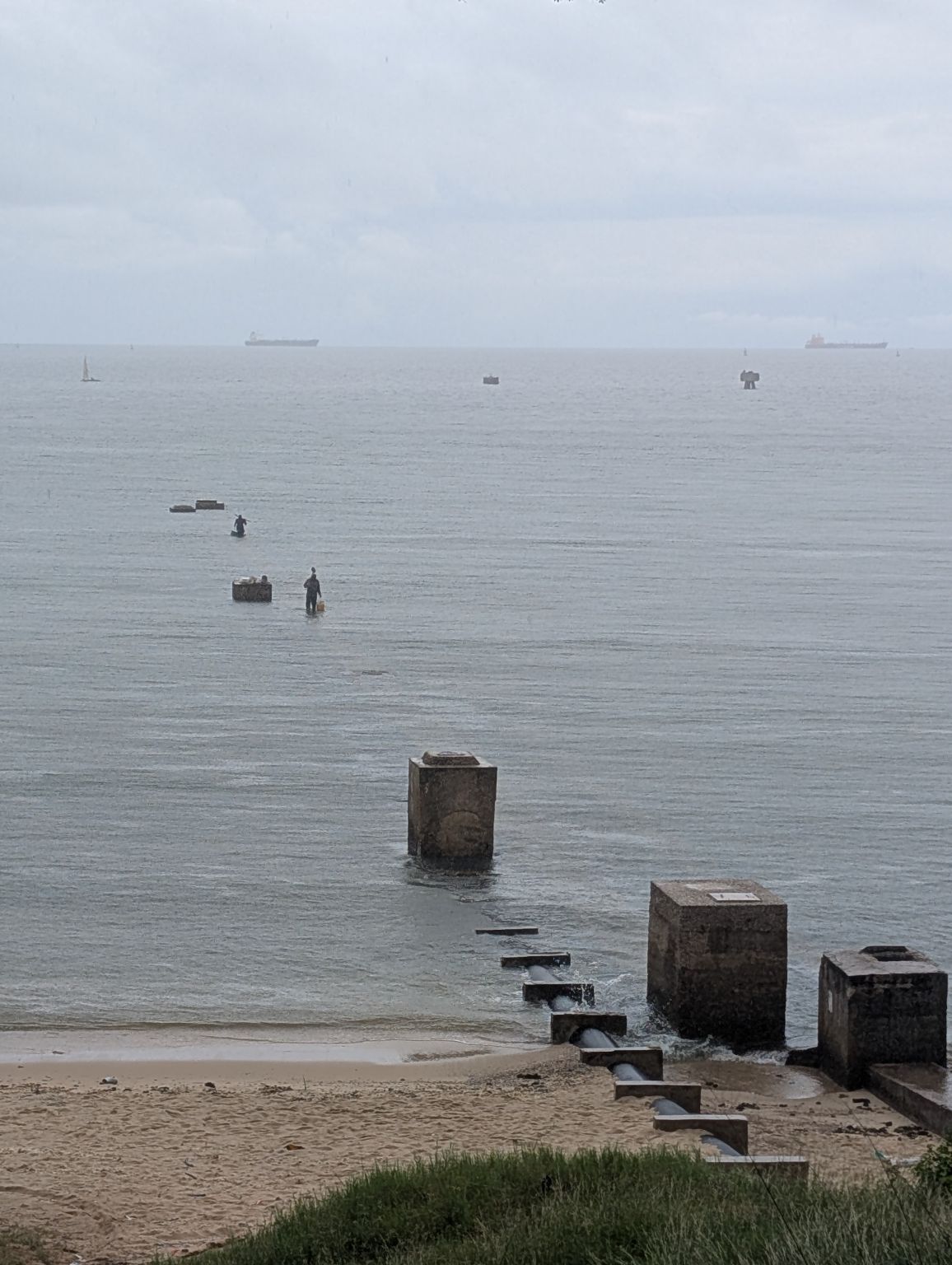
“In the span of 20 minutes, I watched two trucks carrying fecal sludge empty their contents into a pipe that carries the waste out to sea and discharges directly onto a reef within an MPA,” said Wenger, Conservation Scientist and Water Pollution Program Lead at Wildlife Conservation Society.
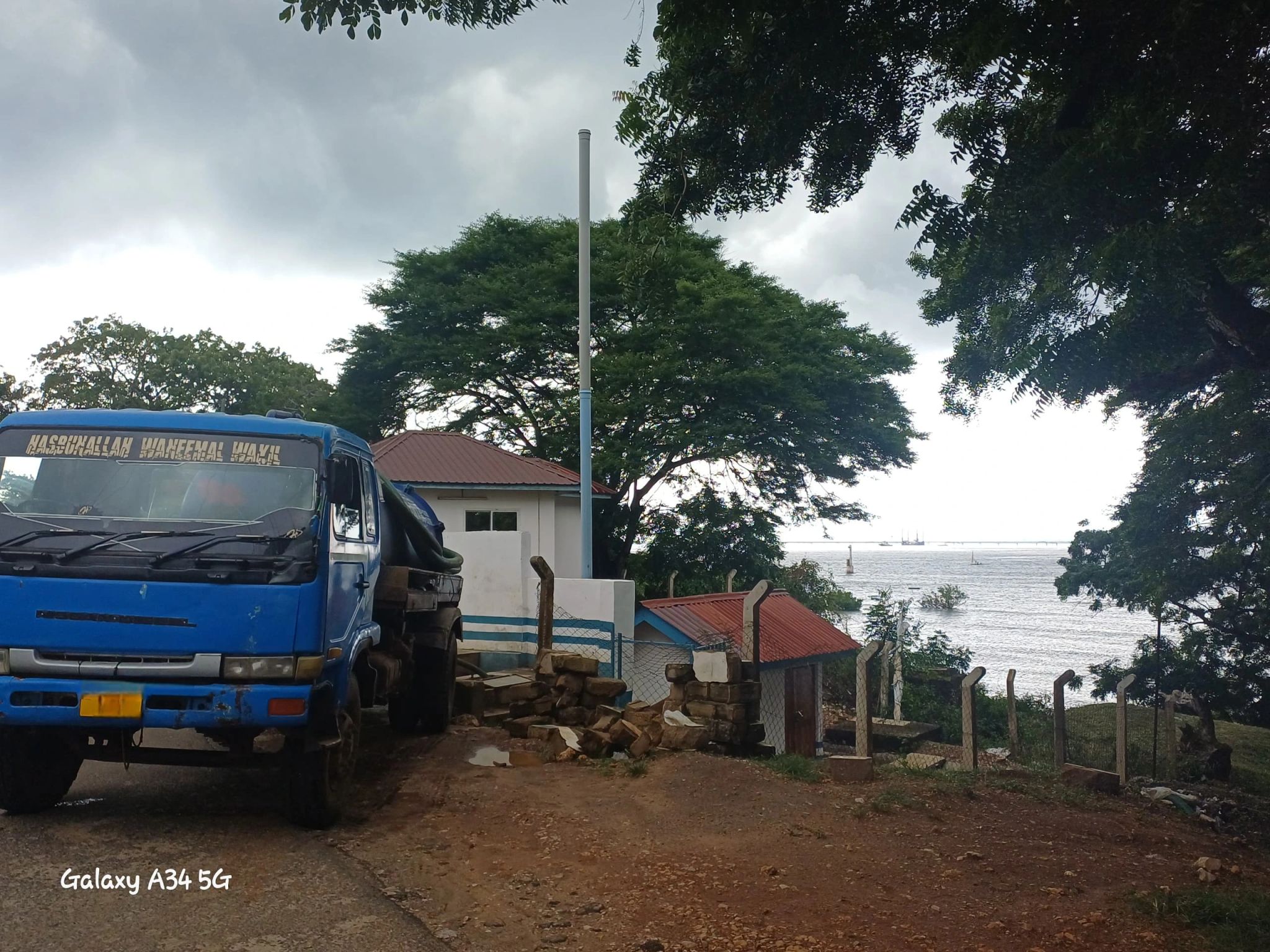
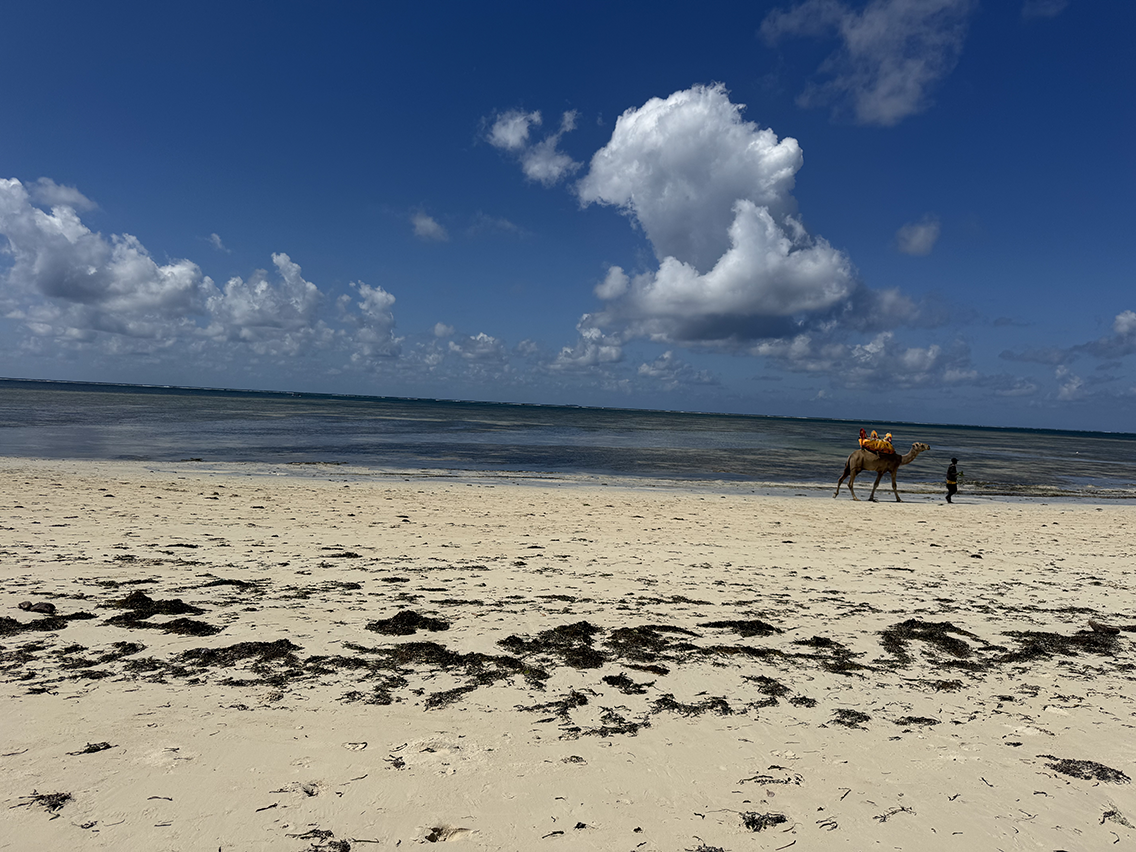
For the first time, the Our Ocean Conference (OOC) was held in Africa, bringing world leaders, scientists, policymakers and ocean advocates to Mombasa to discuss the future of ocean protection. Just beyond the conference venue, the Indian Ocean stretched to the horizon.
“I also watched as two fishermen were walking back to shore on that pipe after most likely fishing off of it,” said Wenger. “We were told that people used to glean for oysters and catch fish nearby, but the oysters and the fish have disappeared.”
During the conference, Mombasa Governor Abdulswamad Sharif Nassir noted that 95% of the city's liquid waste goes unaccounted for, with much of it discharged directly into the ocean or stormwater drains. This means that every conference attendee contributed to the city’s sewage crisis simply by using a toilet, sink or shower.
“This was not illegal dumping,” Wenger said. “I watched them walk into the office, hand in their voucher that will let them get reimbursed, minus the small dumping fee.”
This is a routine and permitted practice in a place where only 15% of residents are connected to a sewer system and no operational treatment facility is available.
Ironically, sewage pollution was largely absent from the conference agenda, even though every attendee's wastewater became part of the very problem they had gathered to solve.
Unfortunately, this story is not unique. Around the world, untreated sewage is often discharged into rivers, lakes and coastal waters because communities lack the infrastructure and financing needed to manage wastewater safely.
Mombasa is Not the Exception
Nearly half of global wastewater (48% according to a 2023 UNEP report) is discharged into the environment untreated. Even high-income cities across the world like New York City, London, Washington D.C., and Paris, continue to struggle with sewage overflows, aging infrastructure and wastewater pollution.
For example, earlier this year, more than 240 million gallons of raw sewage was discharged into the Potomac River, one of Washington D.C.’s most iconic waterways, due to a pipe failure after years of deferred maintenance.
The infrastructure we celebrate is visible. It was noticeable that, ahead of OOC11, Kenya invested in roads, sidewalks and a new bridge to welcome the international delegation. Visible infrastructure becomes a symbol of progress because they are meant to be seen.
However, the infrastructure that protects public health and the coastal ocean is buried underground or located far from where people live and visit.
Visible infrastructure earns political attention and financing opportunities. Invisible infrastructure is expected to stay invisible, even when its failures are impossible to ignore.
Sewage pollution is designed to disappear by dilution. In reality, it is simply displaced. Wastewater is diverted downstream, discharged into rivers and coastal waters, or released into communities that are too often overlooked. What disappears from one neighborhood reappears somewhere else, frequently out of public view but never without consequence.
That consequence was impossible to miss in Mombasa. In our conversations with local leaders, fishers and community members, two issues surfaced again and again: sewage and drinking water. While international delegates gathered to discuss the future of the ocean, local residents we met with were focused on the quality of the water they depend on every day.
Why Sewage Matters to Every Ocean Conservation Goal
The discharge practice Dr. Wenger witnessed raises an important question: Can a Marine Protected Area truly be considered protected if raw sewage is legally discharged within its boundaries?
Recent research confirms this concern. A global assessment led by the Wildlife Conservation Society and the University of Queensland found that 73% of 16,000 marine protected areas are polluted by sewage, with pollution levels inside some protected areas reaching 10 times higher than surrounding unprotected waters. In the world's most important coral reef regions, 87% to 92% of protected areas are contaminated by sewage pollution.
This has significant implications for global ocean goals. The commitment to protect 30% of the ocean by 2030 cannot succeed if protected areas remain exposed to sewage pollution. Coral reefs cannot recover, fisheries cannot thrive, and coastal communities and tourism economies cannot flourish where water quality is degraded.
As Dr. Wenger noted, “Even a perfectly managed marine protected area will fail to achieve benefits for conservation and for people if wastewater keeps flowing in from upstream.”

Part of the challenge is that sewage sits at the intersection of sanitation, infrastructure, public health, water management, conservation and finance. Because responsibility is so fragmented, wastewater often falls through the cracks, receiving far less political attention than issues such as plastics, overfishing or climate change despite its equally far-reaching impacts.
At OOC11, world leaders announced $6.4 billion in new ocean commitments. Of the $223 million committed toward marine pollution, only one specifically addressed wastewater: a $113,333 contribution from the Government of Japan to support sustainable, circular, and climate-resilient wastewater management and post-disaster recovery in Mozambique.
That represents just 0.05% of marine pollution commitments, or roughly five cents for every $100 invested in addressing ocean pollution. The imbalance is not only financial; it is also reflected in how the issue is discussed. The word “wastewater” appeared only once in the Eleventh Our Ocean Conference Preliminary Commitments Outcome Report.
.jpg)
The Good News: Sewage Pollution is a Solvable Problem
Addressing sewage pollution is not a competing priority for ocean protection. It is a necessary foundation for achieving it.
The contradiction we witnessed in Mombasa does not have to be repeated. Proven wastewater treatment technologies, water reuse programs, nature-based solutions, financing mechanisms and policy tools are being successfully implemented worldwide.
Investing in sanitation is one of the highest-return public investments governments can make. A 2012 World Health Organization analysis found an average return of $5.50 for every $1 invested, while more recent estimates suggest returns of up to $7 in some regions, generating an estimated $86 billion in annual global benefits.
The challenge is no longer whether we know how to address sewage pollution. It is whether we are willing to prioritize it.
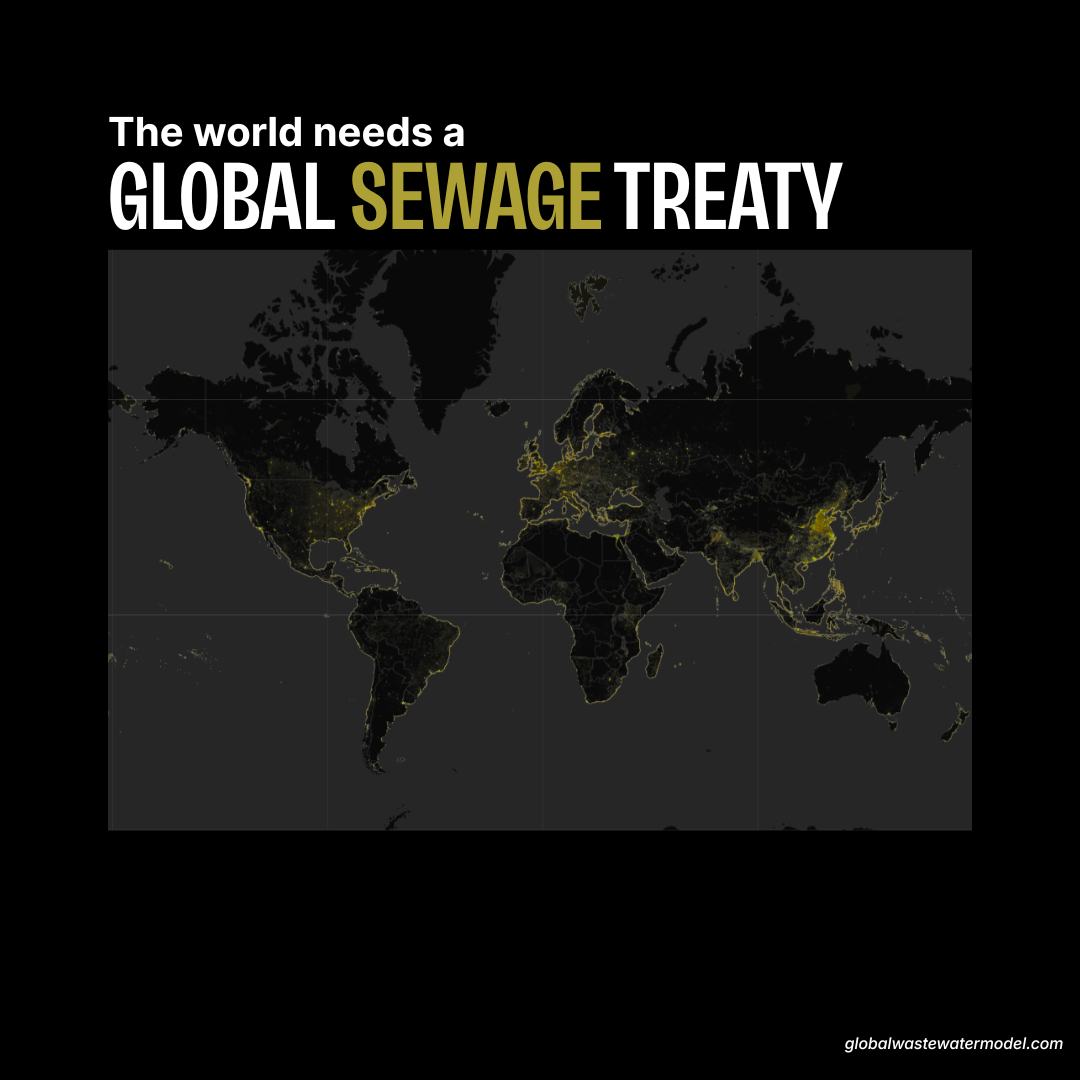
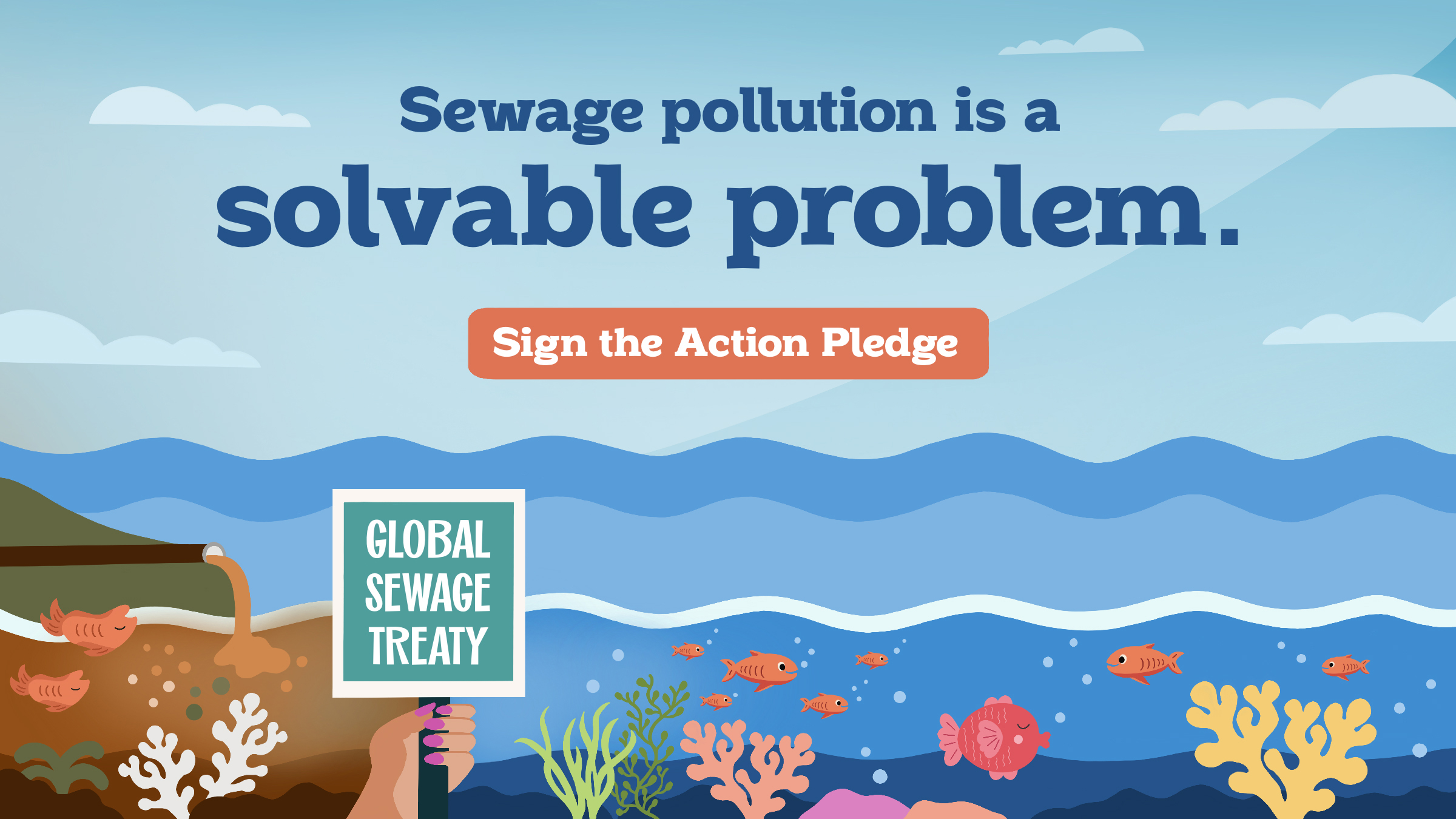
That is why the Global Sewage Treaty matters.
This initiative is building support for a binding United Nations agreement to establish international standards, mobilize financing and help countries end sewage pollution.
If the international community is serious about protecting the ocean, sewage pollution deserves a more prominent place on the global ocean agenda. You can help demonstrate public support by signing the Global Sewage Treaty Action Pledge and joining the coalition calling for coordinated international action.
This isn't a pipe dream. It's a future we can build together.