

- Policy and governance challenges, not technology limitations, are often the primary barriers to scaling wastewater reuse.
- Wastewater reuse can reduce pollution while strengthening water security, ecosystem health, and climate resilience.
- Nature-based wastewater treatment systems can deliver environmental, social, and economic benefits simultaneously.
- Many regulatory frameworks still fail to recognize decentralized and nature-based treatment systems as legitimate infrastructure.
- Treating wastewater as a resource rather than a waste stream can transform conservation and water management outcomes.
If wastewater reuse is going to scale, policy has to catch up. That is one of the clearest messages from Advancing Wastewater Reuse for Conservation and Climate Solutions: Policies, Practices and Lessons Learned, a new report by Dr. Nupur Bapuly, developed in collaboration with The Nature Conservancy’s Pacific Wastewater Pollution Program. The report presents wastewater reuse not as a fringe technical option, but as a strategic opportunity to advance conservation, strengthen climate resilience, and improve water security - if the right enabling conditions are created. To support this transition, the report lays out a roadmap of key policy priorities for advancing wastewater reuse globally:
- Establish clear, fit-for-purpose regulatory frameworks that differentiate standards by end use, reducing uncertainty and enabling innovation.
- Integrate reuse into water, climate, and urban planning frameworks, ensuring alignment with long-term development goals.
- Strengthen institutional coordination through multi-stakeholder platforms and clearly defined roles and responsibilities.
- Invest in public engagement and communication to build trust and normalize reuse as a safe and valuable resource.
- Unlock financing for reuse infrastructure, particularly for decentralized and nature-based solutions.
- Recognize reuse as a climate adaptation strategy, embedding it in national and subnational resilience plans.
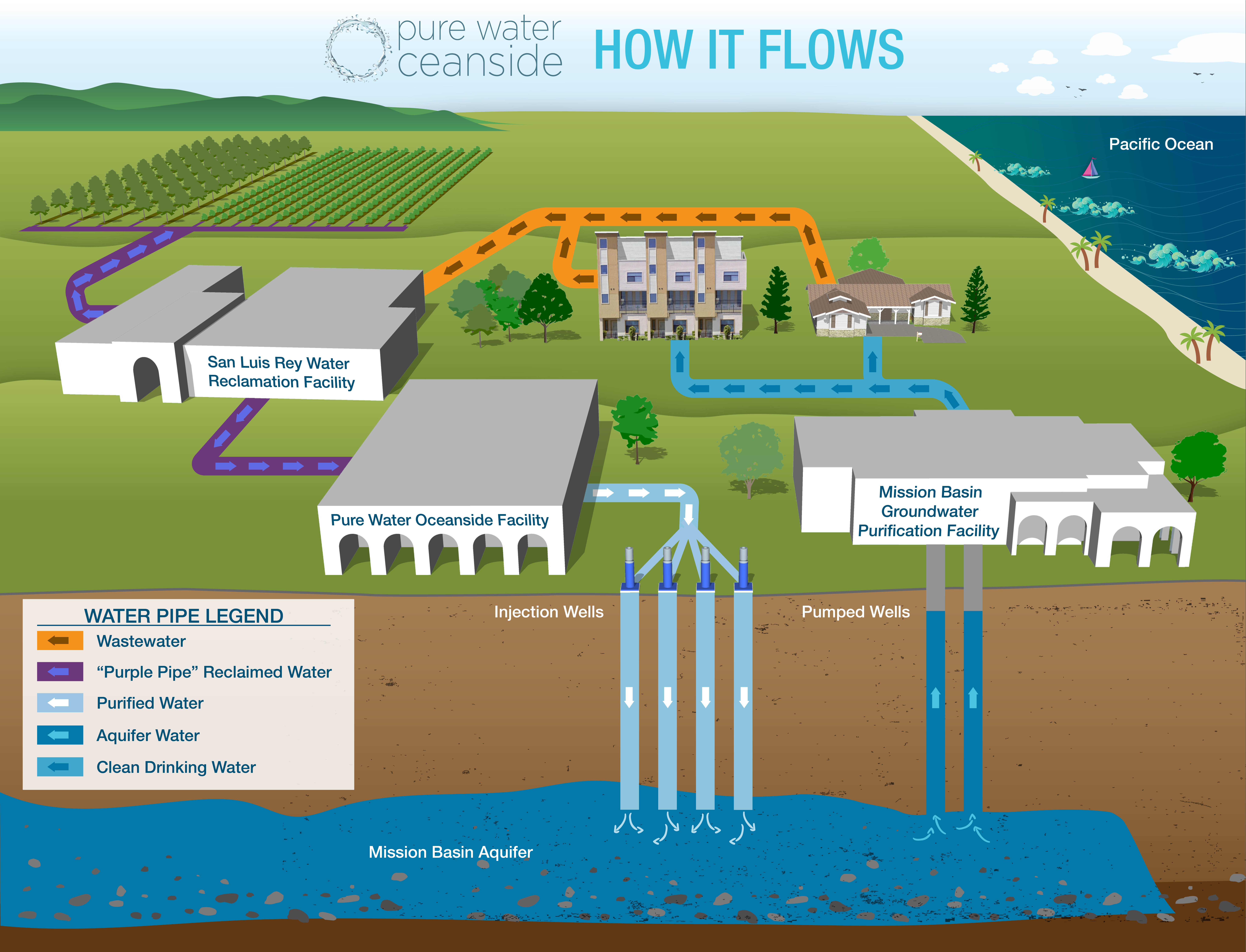
The report’s central finding is straightforward: technology is often not the main bottleneck, rather policy is. Across regions, wastewater reuse is being constrained by fragmented regulations, unclear permitting processes, institutional silos, financing gaps, and lingering public concern. These findings land at a critical moment. Across coral reefs, estuaries, urban wetlands, and freshwater systems, wastewater pollution is undermining ecosystem health and weakening conservation gains, while also intensifying risks to human well-being and climate resilience. Safely treated wastewater can become a powerful resource: reducing pollution, restoring ecological flows, buffering communities against drought and water stress, and supporting disaster resilience. The report reframes wastewater reuse as a cross-cutting conservation strategy that sits at the intersection of water security, environmental restoration, climate adaptation, and sustainable development.

Drawing on case studies from Florida, Hawaiʻi, Long Island, Chennai, Mexicali, Ecuador, and other geographies, the report documents TNC’s evolving role in supporting reuse solutions across a diversity of ecological and institutional contexts. Some of those efforts are highly decentralized and nature-based, such as treatment wetlands and urban lake restoration systems. Others involve large-scale infrastructure transitions, municipal retrofits, or state-level policy reform. What connects them is a shared logic: when treated wastewater is used intentionally, it can reduce nutrient pollution, offset demand for potable water, restore degraded ecosystems, and create more resilient water systems.

Across these case studies, it’s clear that the challenge is not whether reuse can work, but how to advance partnerships, policy and financing to support it. The report identifies several recurring barriers: regulatory ambiguity, institutional fragmentation, infrastructure disconnects, weak financial incentives, public perception challenges, and the absence of clear rules for decentralized or ecological reuse. It also notes that many frameworks still fail to recognize wetlands and other nature-based systems as legitimate treatment infrastructure, even where they are already delivering results on the ground. Advancing wastewater reuse requires a shift in governance, toward fit-for-purpose standards, integrated planning, stronger coordination, and more adaptive institutional systems. If those policy shifts happen, wastewater reuse can move from the margins of water management to the center of conservation and resilience strategy.
Watch the recording from a recent webinar that explores key insights from The Nature Conservancy’s latest report on wastewater reuse as a climate-smart conservation strategy. Dr. Nupur Bapuly will share her findings from conversations with TNC practitioners and corporate partners on enabling conditions for scaling wastewater reuse for climate resilience and ecosystem health. Special guests Naabia Ofosu-Amaah, Garrett Wallace and Kishore Kumar Kabirdasan will share their expertise on supportive policy, cross-sector relationship building, and field-based case studies demonstrating how nature-based wastewater treatment can restore ecosystems, improve water quality, and support urban resilience.


