

- Waste can become a valuable resource instead of a problem, like turning human excreta into fertile soil for trees.
- Low-tech solutions often outperform high-tech ones, with $16 Arborloos reaching over 50,000 households in Ethiopia.
- Good design works with nature, using flies, airflow, bacteria, and fungi to prevent disease and pollution.
- One curious biologist's inventions have spread across continents for decades, shared freely online for anyone to build.
In a tree-shaded backyard in Harare, the capital of Zimbabwe, fruit trees thrive on compost made from human manure. This is the living laboratory of Peter Morgan: biologist, toilet inventor and tree lover. For Arbor Day, here’s one of his creations — the Arborloo — a toilet that grows trees.
Morgan didn’t start out as a toilet inventor; however, as a biologist he’s looked to nature to help solve problems. Over the past fifty years, he’s tapped into natural science to improve health, sanitation and food security for people in rural Africa and beyond.
Morgan moved from the UK to Malawi in the late 1960s to study fish in a local lake. A few years later, he settled in Zimbabwe to work at the Blair Research Lab on schistosomiasis (schis·to·so·mi·a·sis), a disease spread by a freshwater snail. His mentor, Dr. Dyson Blair, encouraged Morgan to shift his focus to improving water supplies, hygiene and sanitation as a way to prevent the spread of diseases and improve public health. At the time, smelly, fly-ridden pit toilets were the norm, and they often polluted water and spread disease.
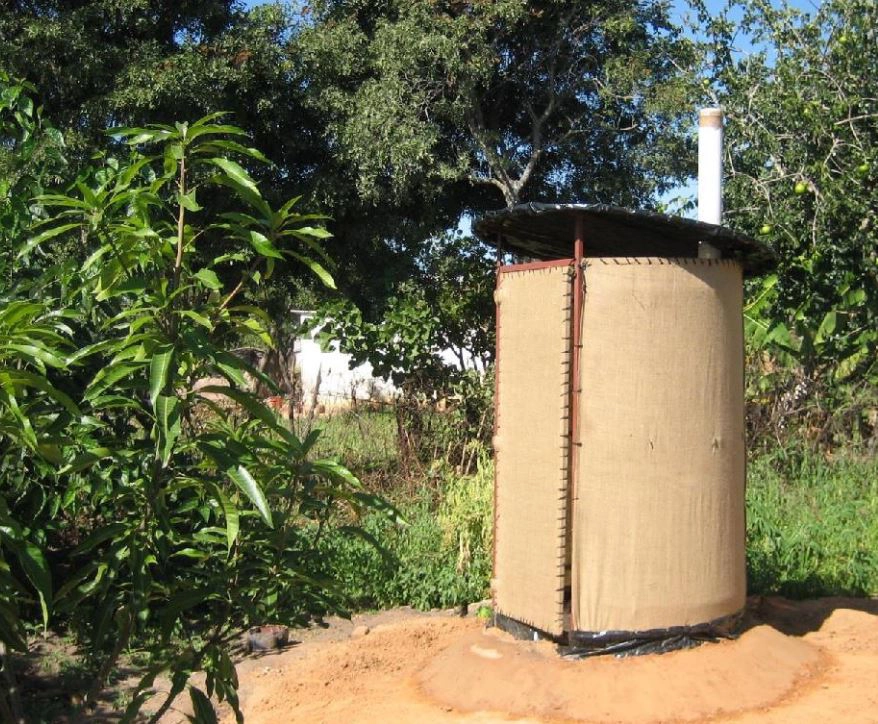
With fly behavior and the physics of air flow in mind, Morgan added a vent to the pit toilets that drew flies away from feces and trapped them in the pipe. It was a dramatic improvement over the pit toilets, and the new design took off and was promoted by the government.
Later on, a friend from Sweden introduced him to ecological sanitation – recycling the nutrients in human excreta – and his idea of toilets shifted. Instead of merely preventing problems, he saw how toilets could improve the lives of the people who used them. Morgan wanted to bring these solutions to rural Africans and so looked for simple methods to recycle nutrients and grow food.
The Arborloo
Morgan turned to soil bacteria and fungi — nature’s recyclers — to transform poop. In backyard experiments, he combined soil, leaves and wood ash with excreta and watched the mix change into fertile soil. One day, he observed a compost pit he’d made and realized that instead of moving feces from a toilet to the pit for processing, he could simply locate the toilet over the pit. Once full, he’d cover it with soil and plant a tree on top. The Arborloo was born.
This toilet is made of three simple parts.
- A ring of brick or cement encircles a shallow pit, about a meter deep. The ring prevents the sides from caving in. Unless the groundwater table is very high, this depth is safe and prevents groundwater pollution.
- A cement slab with a hole is placed on top of the pit.
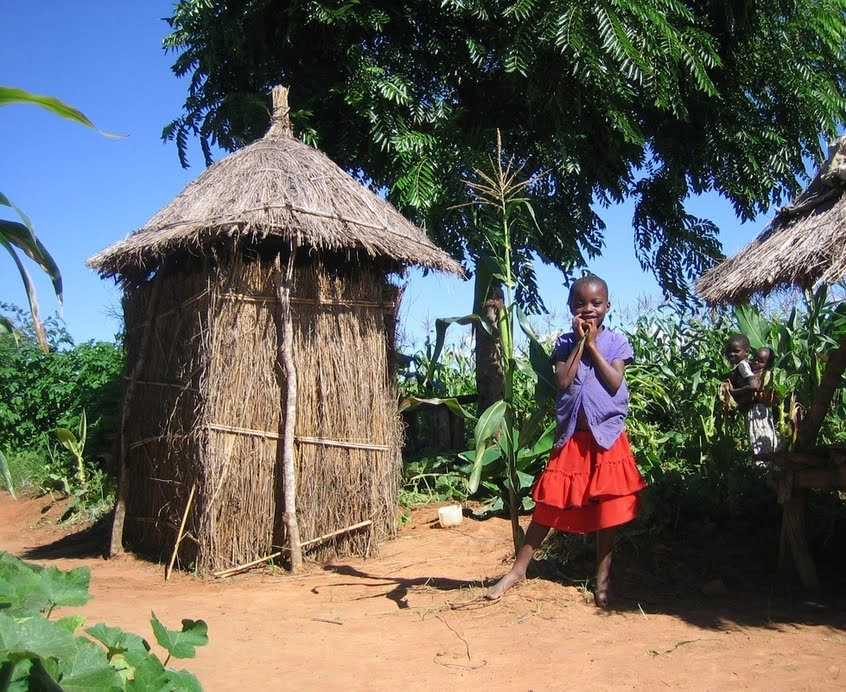
- A toilet structure is built on top of the slab, either made from natural materials, like thatch, or metal or fabric.
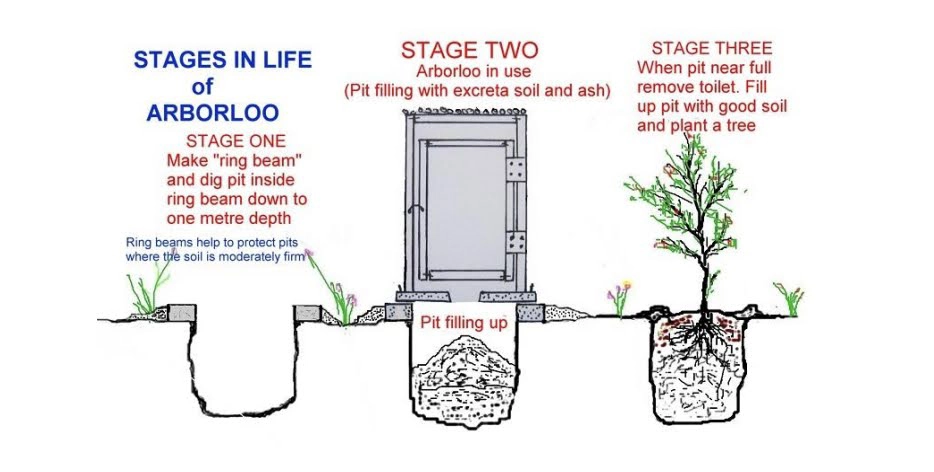
Soil, ash and leaves are added regularly to cover the feces. When the pit is nearly full, the slab and structure are moved to another pit. The old pit is topped with soil and a tree is planted on top. As the tree grows, its roots tap into the decomposing pee and poo, a lifetime supply of nutrients safely underground. And all this happens without any chemicals, electricity or maintenance.
“You could say [the Arborloo] converts human excreta into vitamins, if a delicious fruit is the end result,” said Morgan. Other people grow trees for shade or timber.
Arborloo toilets are now found in Zimbabwe, Malawi, Ethiopia, Haiti and beyond. If Morgan had to make a guess, he’d estimate a few hundred thousand are in use.

Toilets that make compost
These toilets are widely used in Ethiopia. With the help of an aid organization, over 50,000 Arborloos were installed there in a four year period (2005 to 2009). The toilets cost less and were easier to build than the conventional deep pit toilets – the $16 dollars per toilet includes training on how to use it. At this price, it would take just $16 million dollars to reach a million households. Compare that impact with the $13 million awarded in research money to just one university by the Gates Foundation to “reinvent the toilet” or create a high-tech version to accomplish what the Arborloo does via natural processes.
Of course, many homes don’t have space to move their toilet each year or plant new trees. That’s why Morgan developed a compact version – the Fossa alterna. This toilet is made with two shallow pits under one structure. When one pit is full, the toilet is moved atop the empty one. While that pit is filling, the contents of the first pit decompose and the material is safe and ready to use by the time the second pit is full. This cycle keeps uncomposted feces away from people and allows for annual harvesting of the humanure compost for use on trees or other crops.
Waterless, compost-style toilets like the Arborloo help prevent water pollution, yet people still need access to clean water. That’s why Morgan has also invented simple water pumps and hand washing devices. He freely shares designs for these devices, plus the toilets, online.
Visit his website to find books to download, videos, reports, papers and more, dating back 50 years. You’ll also learn about his mentors and collaborators, his garden and experiments, but you won’t learn about when he was awarded the Stockholm Water Prize, often called the “Nobel Prize of Water,” in 2013.
For a world needing more trees and more toilets (with 1.5 billion people lacking one), here’s to the Arborloo. Morgan, who is “very fond of trees,” says his favorite type to grow in an Arborloo is the mulberry.
Laura Allen is a writer and educator based in Oregon. She co-founded Greywater Action, where she teaches people how to transform their homes to reuse water. She authored the books, The Water Wise Home: How to Conserve, Capture and Reuse Water in Your Home and Landscape, and Greywater, Green Landscape. Her article, For a better brick, just add poop, won the Gold Award in Children’s Science News from the AAAS Kavli Science Journalism Awards (2023). Her favorite pastimes include gardening, hiking, reading and visiting eco-toilets.

.jpg)
.jpg)
