

World Toilet Day (November 19th) is the global moment to think about toilets and why they matter. This year’s theme, “Safe toilets. Equal futures,” connects gender equality with sanitation. Around 3.4 billion people still lack safe toilets, and when women and girls gain access, they have more chances to attend school and work.

Still, unsafe toilets impact everyone: from those without any toilet to those with flush toilets (and sewage), which too often pollutes rivers or oceans.That’s why we need better toilets that protect people and the planet. In honor of this World Toilet Day, here are six future-friendly toilet systems that recycle nutrients, make energy and boost biodiversity.
1. Be a sport, donate your pee
Even a urinal in a sports stadium can be future-fantastic. Take the DHL Stadium in Cape Town, South Africa, where 2700 liters of liquid gold flowed from one urinal for processing. The company Pee-Cycling, started by researchers at the University of Cape Town, created the urine-to-fertilizer system that transforms a stadium urinal into a golden opportunity. Urine is piped to a tank where it is stabilized to prevent nutrient loss, then the nutrients are concentrated via reverse osmosis. The end result is liquid fertilizer plus recycled water.
They’re not the only ones moving from the lab to a sports arena. For the past year, the Swedish company Sanitation 360 has collected and processed urine from a sports arena in Uppsala, Sweden. Their system dehydrates the urine to create fertilizer pellets.
2. Nature-friendly and disaster-proof toilets
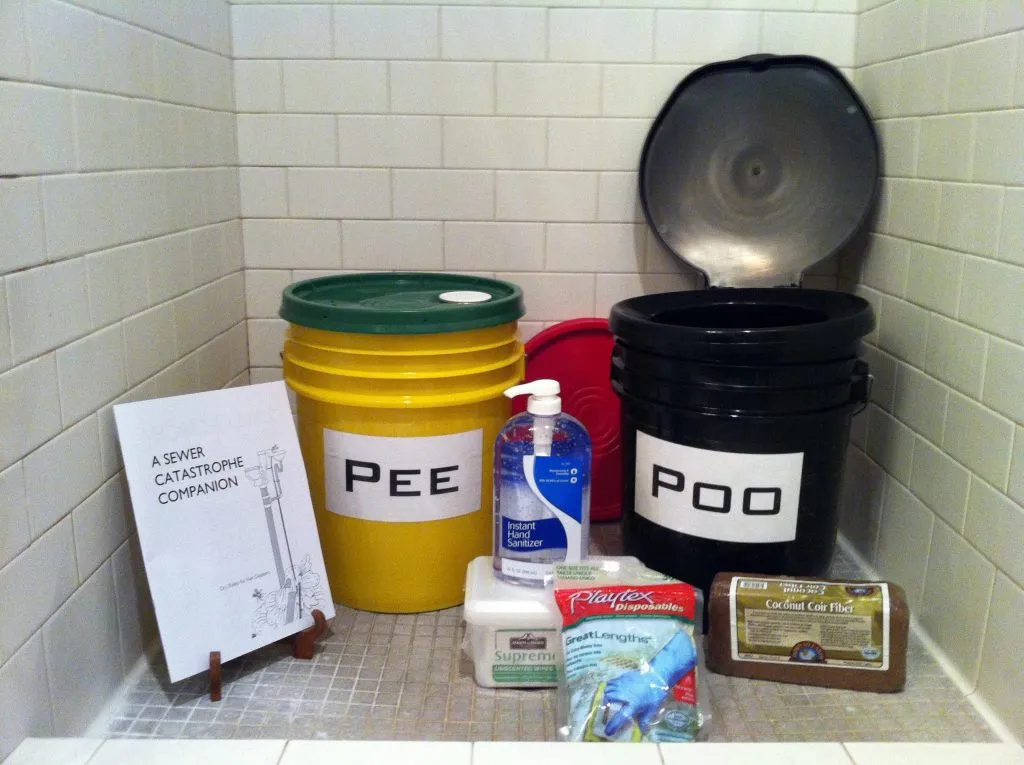
Stand-alone, do-it-yourself toilets are low-cost systems to compost your poo. The simple, widely-used humanure toilet uses buckets to collect excreta and an outdoor compost bin to convert it to humus. Other designs use in-ground composting, such as the arbor-loo — a shallow pit under a toilet that is planted with a tree after being filled — and the fossa alterna system — two shallow pits that are used alternately, allowing for the contents of one to rest and compost for 12 months before its contents are removed.
All these toilets are perfect for disaster preparedness — fires, floods, earthquakes — when existing sanitation systems break down. And with a few simple parts, you can have your own! It’s called the twin-bucket toilet system. The organization PHLUSH explains how to make this type of toilet.
3. Nutrient-recycling designer bathrooms
Here’s to a future with more buildings that process our excreta. Designers of the PAE Living Building in Portland, Oregon, eschewed the sewer and instead installed ultra-low flow, vacuum flush toilets to whisk poop into one of 20 large compost processors. Microbes break down the feces and toilet paper and turn it into nutrient-rich, pathogen-free compost. The building also has urinals, which are piped separately to a collection tank to be processed into plant food: a liquid, nitrogen-rich fertilizer and a phosphorus-rich powdered soil amendment. These urine derived products are sold online.

4. Portable toilets can be “Potties with a Purpose”
Imagine, a future free of stinky chemical portable toilets! Wasted*, a Vermont-based company, has better toilets: they’re waterless, they’re chemical-free, they’re portable. Plus, Wasted* toilets harvest urine to make fertilizer; it’s sold in their online shop, *NotWasted. Multiple styles of toilets are for rent: toilets for events, construction sites and semi-permanent bathrooms (for places such as parks or trailheads).
The Natural Event is a pioneer in bringing eco toilets to festivals and gatherings. Since 2002, they’ve delivered simple compost toilets to such events in 12 countries (not yet in the US). Users learn to add a scoopful of sawdust if they poo. At the Glastonbury Festival, they provide over a thousand toilets! Which, after five days of visitors, creates a shit-ton of compost for local farmers.
5. Constructed wetlands and poplar forests
With a few tweaks, even wastewater treatment plants, and all the flush toilets connected to them, can improve the environment. For example, in wastewater wetlands, nearly-clean sewage water flows through a human-designed landscape to productive, wetland habitats. The nutrient-rich water boosts the whole food chain: microbes, insects, birds, plants. And the water is purified in the process. Constructed wetlands that adjoin wastewater treatment plants are sprinkled across the country.
Poplar forests are another partner in cleaning water. These trees are fast-growing, water-loving and useful. They thrive on dirty water and the nutrients in our excreta, converting those leftovers into wood. Harvested poplars can create wood products, biochar, or even bioplastics and biofuels.

6. Electric food-producing toilets: Mi-hy
Yes, this is not a toilet (yet)…. The mi-hy (microbial fuel cell hydroponics) system is truly future-fantastic. It’s low-tech and high-tech, powered by microbes and can grow food anywhere. The system runs on a technology called microbial fuel cells — basically a microbe-powered battery. So long as the microbes have food, the battery stays full. The fuel cell takes in dirty water and produces electricity, which is used to power lights and a hydroponics food system. The liquid discharged from the fuel cell has enough nutrients to feed the plants growing into liquid.
An artistic prototype of this system starred in an exhibition in Milan, Italy, last year, and ran for seven months, taking this super-cool technology one step closer to being connected to a real toilet.
Laura Allen is a writer and educator based in Oregon. She co-founded Greywater Action, where she teaches people how to transform their homes to reuse water. She authored the books, The Water Wise Home: How to Conserve, Capture and Reuse Water in Your Home and Landscape, and Greywater, Green Landscape. Her article, For a better brick, just add poop, won the Gold Award in Children’s Science News from the AAAS Kavli Science Journalism Awards (2023). Her favorite pastimes include gardening, hiking, reading and visiting eco-toilets.


